A few weeks ago, I found myself doing something absurdly ordinary. I was looking at a photograph. Not for very long. Perhaps only a few seconds more than necessary. The kind of photograph everyone takes and almost immediately zooms into — not to look at the scenery, the lighting, or the people standing beside them, but to search for themselves. We all do it.
A slight tilt of the head.
A brief pause.
A quiet thought.
"Do I really look like that?"
Then life continues. Emails need answering. Dinner needs making. Someone sends another message. And yet, sometimes, the thought remains. For days. Sometimes for years. Perhaps aesthetic medicine does not begin in consultation rooms or operating theatres. Perhaps it begins here.
In mirrors.
In photographs.
In those strange little moments that almost everyone experiences but few openly discuss. Because human beings have always had a curious relationship with appearance. We rearrange flowers in a vase until something suddenly feels right. We move a chair a few centimetres and an entire room somehow becomes more harmonious. We repaint walls, buy different lamps, spend forty minutes choosing clothes that are supposed to look effortless.
Nobody considers this unusual. Nobody tells a living room to simply accept itself.
A history written on the body
And yet the moment the conversation reaches the body, things become strangely complicated. Perhaps because bodies feel more personal. Or perhaps because appearance has always carried more meaning than we comfortably admit. History certainly seems to suggest so. Long before social media, long before fashion magazines and aesthetic clinics, people were already decorating themselves and shaping their appearance.
Kayan women wore brass coils. Ndebele traditions transformed adornment into identity and belonging. European courts reshaped silhouettes through corsets, fabrics, wigs and powder until clothing itself became a form of architecture.
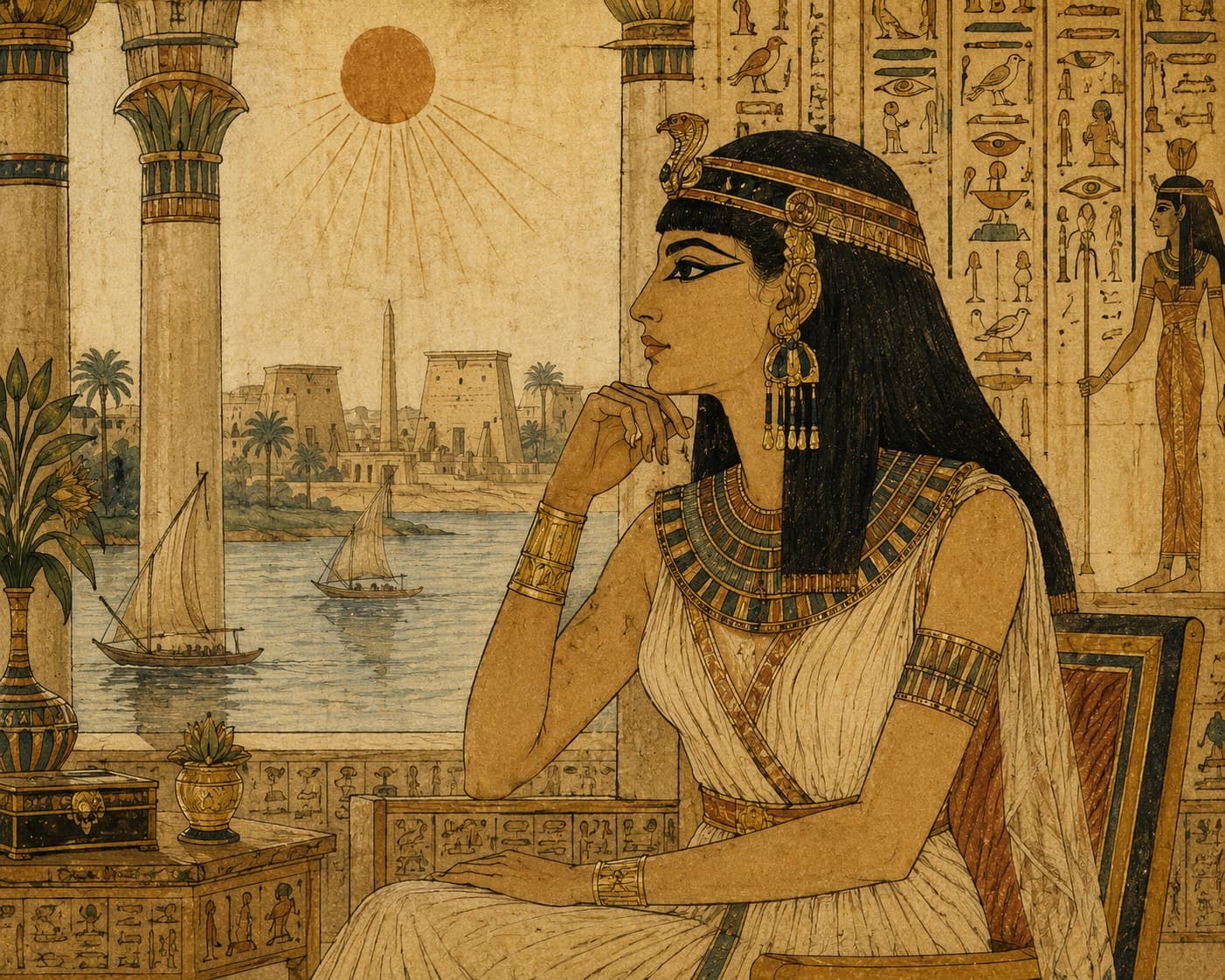
Cleopatra, perhaps one of history's most enduring figures, is still remembered through stories of beauty and spectacle. Historians frequently remind us that her intelligence, education and political instincts were probably far more significant than any individual feature.
Perhaps that is precisely the point. Appearance rarely acts alone. It exists beside confidence, charisma, timing, culture and circumstance. And yet history still remembers the image.
Thousands of years later, figures like Kim Kardashian demonstrate something similar in a completely different world. Whether one admires her or not is almost beside the point. What is interesting is how intuitively modern culture understands that image requires work.
Public personas are curated. Photographed. Repeated. Refined.
Perhaps ordinary people are not entirely different. Most of us simply do these things on a much smaller scale. Because, in one way or another, we all participate in constructing how we appear to the world. This does not necessarily mean vanity. It may simply mean that appearance has always been one of the many languages through which human beings express identity.
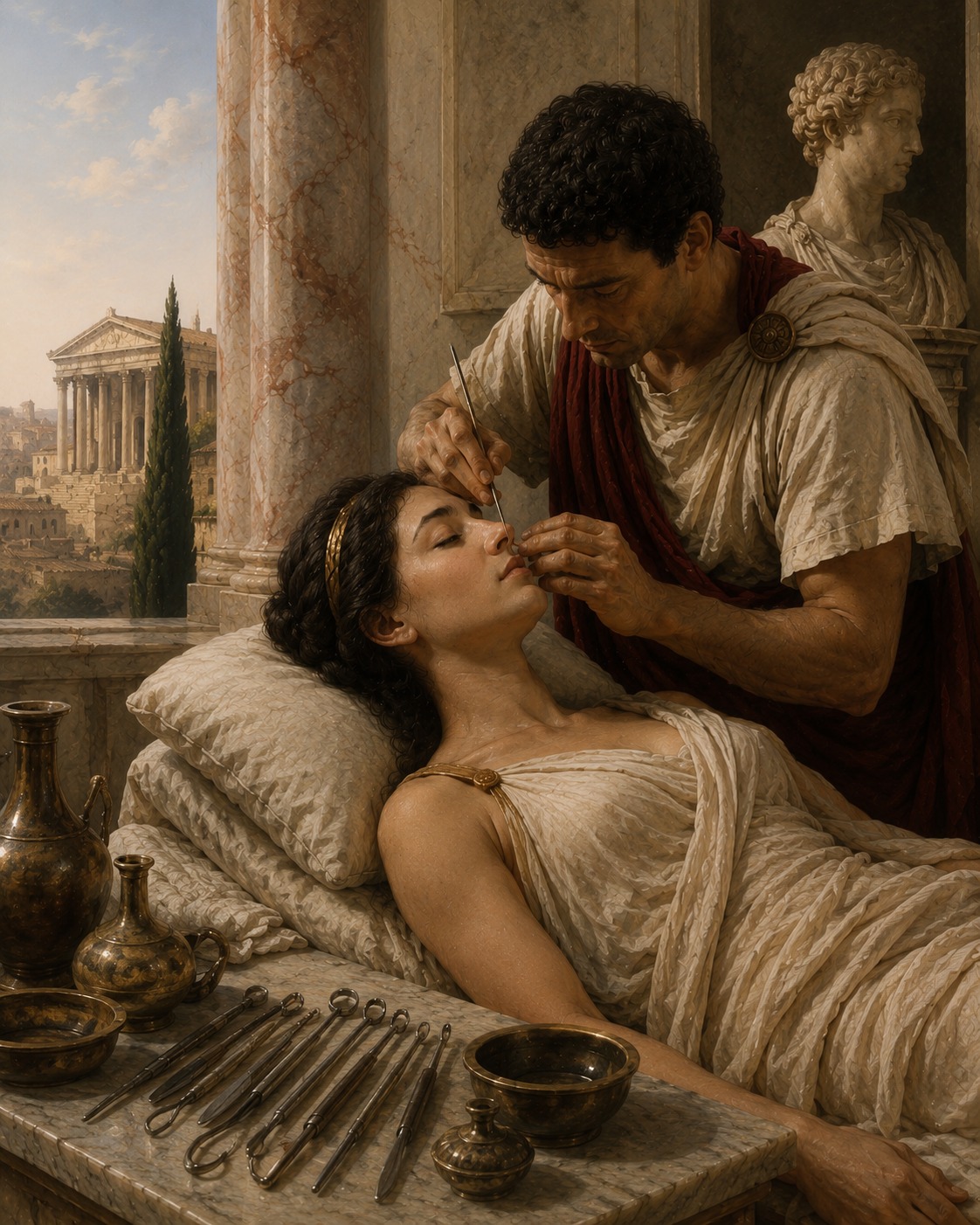
Roman surgeons apparently attempted procedures long before antibiotics, anaesthesia or contemporary standards of safety existed. It is difficult to imagine voluntarily undergoing such treatments. And yet some apparently did. Not necessarily because they were uniquely vain. Perhaps simply because visible appearance has mattered to people for much longer than we sometimes like to admit.
When appearance is not everything
Of course, none of this means that appearance is everything. Quite the opposite. We have all met people who seemed extraordinarily attractive and yet deeply unhappy. And we have all met people who would never appear on magazine covers and who nevertheless possessed undeniable presence. This alone should probably make us suspicious of simple answers. Appearance matters.
And yet it is clearly not everything.
The relationship is far more complicated than either side of the debate sometimes admits. Some people undergo surgery and feel relieved. Others discover that what they were searching for was never entirely physical.
Human beings are rarely as simple as before-and-after photographs.
Perhaps this is why phrases such as "just love yourself" occasionally feel incomplete. Human beings have never remained entirely unchanged.
We study. We move cities. We change careers. We learn languages. We develop taste. We become different people many times throughout our lives.
Nobody arrives in adulthood fully formed. We are all, in one way or another, ongoing projects. The body simply exists within this broader process of becoming.
The 2 a.m. search
There is another strangely universal ritual. It usually happens late at night. Someone is lying in bed with their phone. One search becomes another.
"Rhinoplasty swelling after six months."
"Upper blepharoplasty recovery."
"Breast lift scars one year later."
A few minutes later they are reading a forum post written by someone they will never meet, living in another country, posted three years earlier. That person had the same concern. The same fear. The same questions.
And somehow, a complete stranger makes them feel slightly less alone. Perhaps this tells us something important. Human beings do not seek only information. They seek other people. Perhaps this is one of the oldest human behaviours of all: looking for someone who understands.
Beauty has never been entirely individual. People learned hairstyles from mothers. Friends exchanged skincare advice. Fashion travelled through communities. Beauty rituals moved between generations. People borrowed ideas from one another and quietly reassured each other.
Today, we simply do these things with better Wi-Fi. The technology changed. Human behaviour did not.
What people are really looking for
And perhaps this is where modern aesthetic conversations often become frustrating. Information exists everywhere. Yet the conversation itself feels strangely fragmented. Doctors explain procedures in one place. Patients share experiences somewhere else. Long-term results disappear beneath algorithms. Recovery becomes a ten-second video.
But healing is not a jump cut. Recovery is a story. And stories require time.
Perhaps what people are looking for is not simply more information. Perhaps they are looking for context. Continuity. Memory. Community. A place where someone can return one year later and say:
"This is what happened."
"This took longer than I expected."
"This was worth it."
Or perhaps:
"This was not the right decision for me."
Because medicine matters. Expertise matters. But lived experience matters too.
Maybe that is why communities surrounding aesthetic medicine feel increasingly important. Not because communities replace medicine — they cannot — but because uncertainty is easier to navigate when someone else has already walked the road before you.
Perhaps the more interesting story has never really been beauty itself. Perhaps it has always been the strange and occasionally contradictory relationship human beings have with appearance.
We decorate ourselves and then insist appearances do not matter. We seek individuality while borrowing ideas from everyone around us. We continuously change, yet often expect the body alone to remain untouched.
Perhaps these contradictions do not need to be solved. Perhaps they simply need to be acknowledged.
Because conversations about appearance were never really only about vanity. They have always, in one way or another, been conversations about identity, ageing, belonging, memory and the endlessly human desire to recognise ourselves in the mirror.
And perhaps that person standing quietly in front of the bathroom mirror on an ordinary Tuesday morning, wondering whether a small change might make them feel slightly more like themselves, is not unusual at all.
Perhaps they are simply human.